31 August 2026
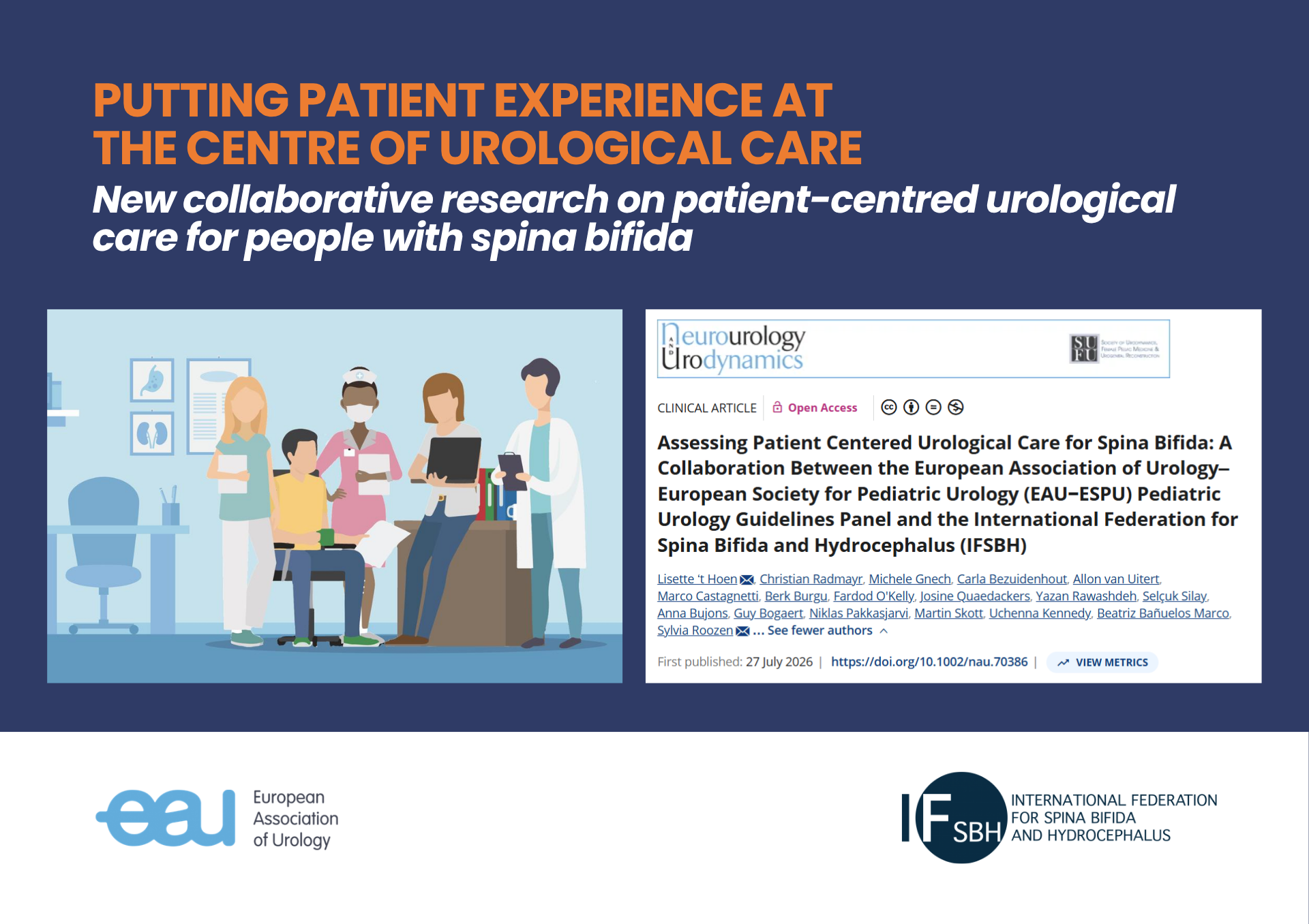
A new collaborative study bringing together the International Federation for Spina Bifida and Hydrocephalus, its member associations, people with spina bifida, and the European Association of Urology–European Society for Pediatric Urology (EAU–ESPU) Paediatric Urology Guidelines Panel has been published in Neurourology and Urodynamics.
“Assessing Patient Centered Urological Care for Spina Bifida: A Collaboration Between the European Association of Urology–European Society for Pediatric Urology (EAU–ESPU) Pediatric Urology Guidelines Panel and the International Federation for Spina Bifida and Hydrocephalus (IFSBH)” brings together clinical expertise and the lived experiences of people with spina bifida to better understand urological care across Europe.
The study brought clinical expertise and the lived experiences of people with spina bifida together to better understand urological care across Europe. Through the support of IF member associations, the survey reached people with spina bifida across the region, with 281 people taking part and sharing their experiences.
People with spina bifida require lifelong, multidisciplinary care, but the organisation and availability of healthcare can vary considerably between countries. The study aimed to explore these differences while also looking at quality of life, treatment experiences and aspects of sexual health that are important to people with spina bifida.
Urological care as an enabler of inclusion
For people with spina bifida, access to appropriate urological care is not only a matter of medical management. Bladder and bowel health, continence and access to appropriate treatment and supplies can have a profound impact on independence, dignity, participation and quality of life.
Access to appropriate, affordable and high-quality healthcare is a fundamental right. Yet the organisation, availability and affordability of urological care can vary considerably between countries, potentially creating inequalities in access and outcomes.
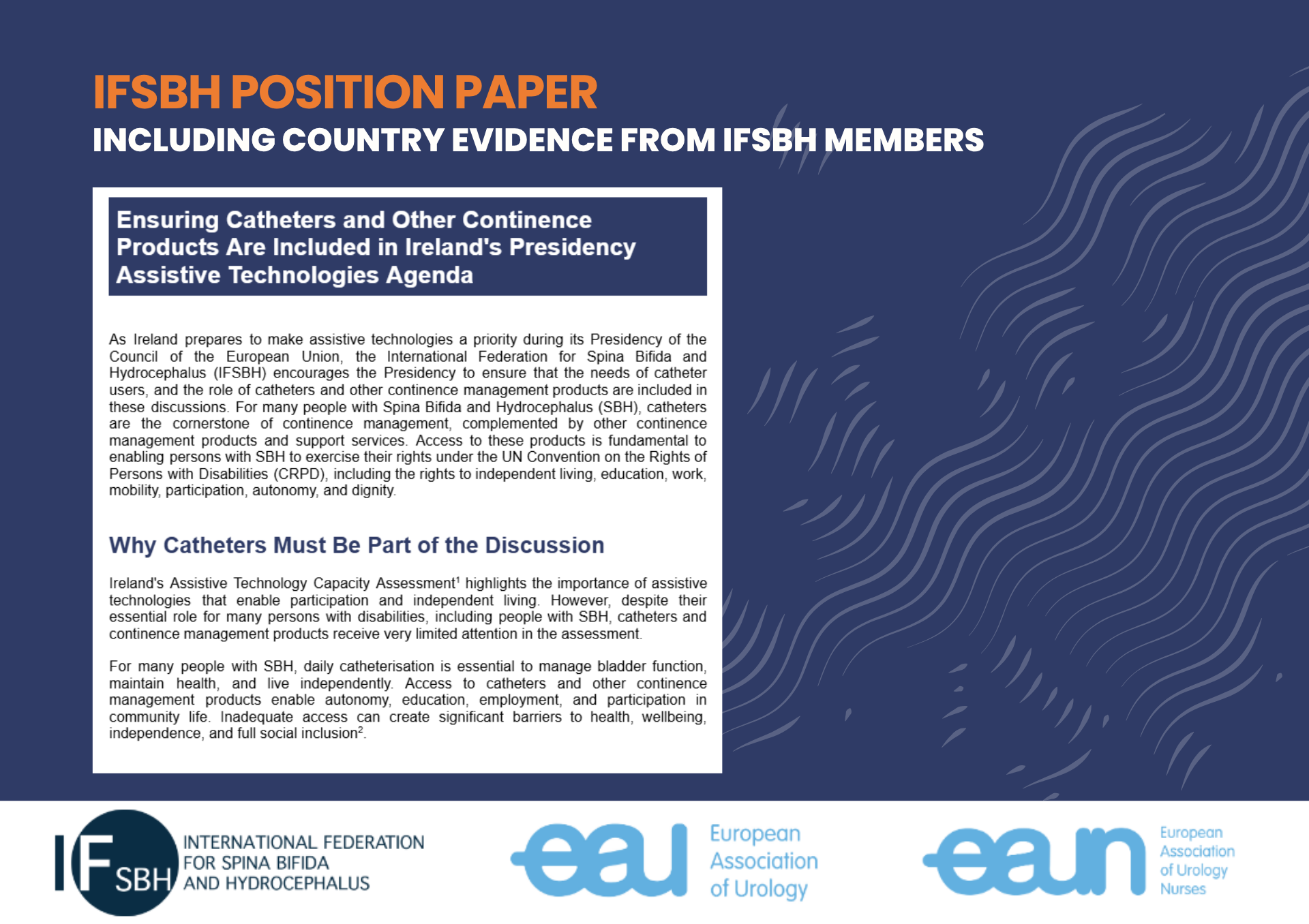
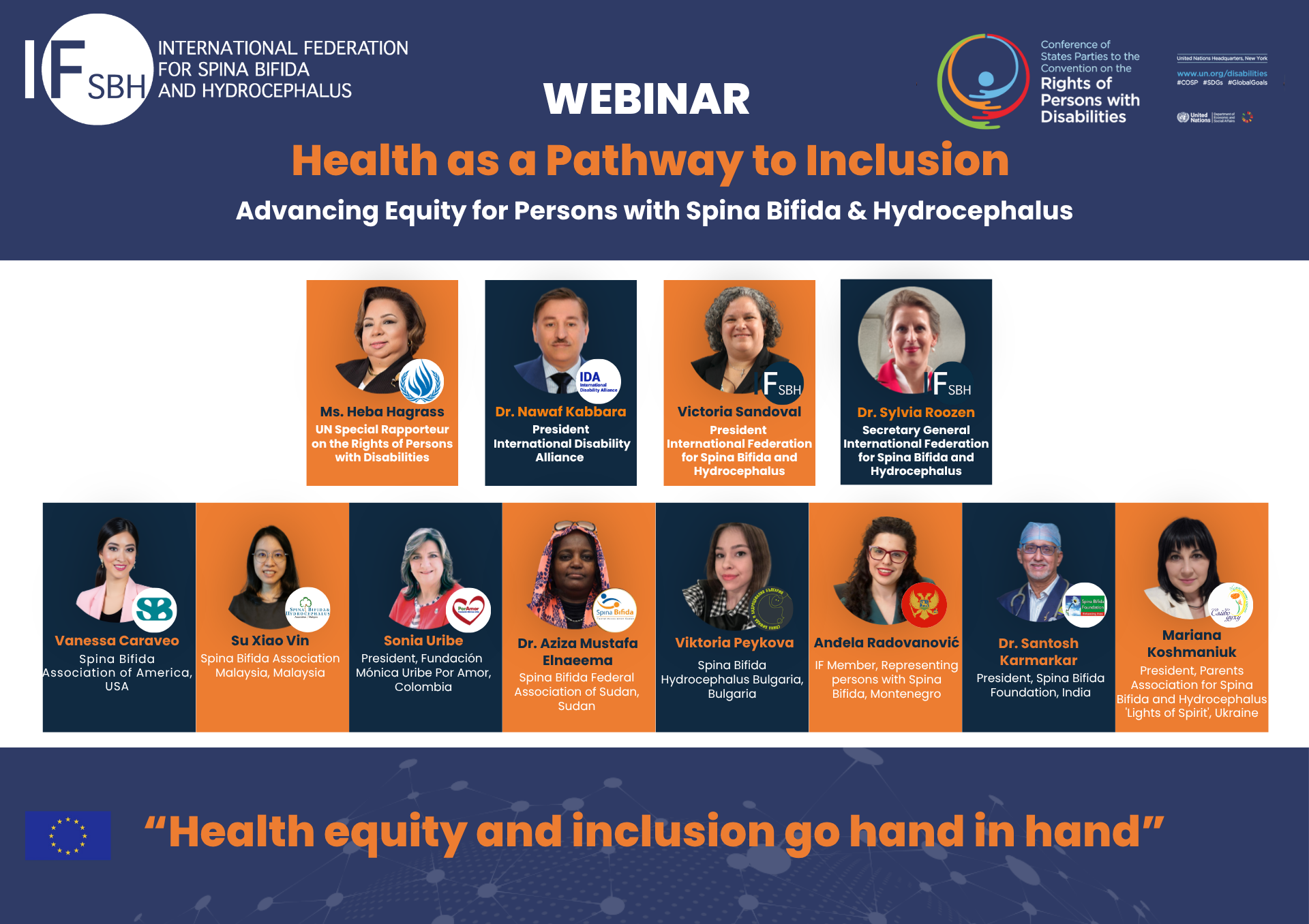
This research forms part of IF’s broader work to advance health equity and the implementation of the United Nations Convention on the Rights of Persons with Disabilities (UNCRPD). Ensuring that people with spina bifida can access the healthcare they need throughout their lives is an important part of enabling them to participate fully and equally in society.
Listening to the experiences of people with spina bifida
This study was developed collaboratively by the EAU–ESPU Paediatric Urology Guidelines Panel and IF. A digital survey was made available in 11 languages and included questions on demographics, medical treatment and the organisation of care, alongside validated quality-of-life and sexual health questionnaires.
A total of 281 people with spina bifida completed the survey.
The findings highlight several important areas for further attention. Quality-of-life scores were lower than those reported in historical cohorts across the assessed domains, including areas related to independence, family, bladder and bowel function. Sexual health and relationships also emerged as important areas of concern, highlighting an aspect of life that can be overlooked in the care of people with spina bifida.
The findings on sexual health among respondents aged 13 and older further underline the need for appropriate information, support and care in this area throughout the life course.
Inequalities in access to care
The research identified differences between countries in how urological care is organised and accessed. These included variations in the payment of catheters and medication, as well as challenges around navigating healthcare systems and identifying the appropriate first point of contact.
Such differences can create barriers to exercising the right to health on an equal basis with others. They can also have consequences beyond healthcare itself: when essential urological care, treatment or supplies are inaccessible, people may face greater barriers to education, employment, social participation, independence and community life.
Accessible, affordable, coordinated and person-centred urological services are therefore an important enabler of inclusion throughout the life course.
Putting the voices of people with spina bifida at the centre
For IF, this collaboration demonstrates the importance of meaningfully involving people with spina bifida in research and guideline development. The lived experiences of people with disabilities are essential to identifying where healthcare systems create barriers and where changes are needed.
This approach is closely aligned with the principles of the UNCRPD: people with disabilities should be able to participate in decisions affecting their lives and should have access to healthcare on an equal basis with others.
The findings also contribute to IF’s broader work on health equity, helping to identify differences in access and experiences of care and highlighting areas where healthcare systems need to become more equitable, accessible and responsive to the needs of people with spina bifida.
From healthcare access to inclusion
The study illustrates why urological care needs to be considered as part of a broader health equity and inclusion agenda. Effective bladder and bowel management can support independence, dignity, participation and quality of life. Conversely, gaps in care can become barriers to inclusion.
For IF, collaboration between people with spina bifida, healthcare professionals and researchers is an important way of generating evidence and supporting changes in healthcare systems and clinical practice.
This publication is therefore not only an important contribution to improving urological care. It is also part of the broader effort to address health inequalities and advance the rights of people with spina bifida, ensuring that access to the healthcare they need can enable them to live, participate and contribute fully and equally throughout their lives.
Acknowledgement
IF warmly thanks its member associations for their important role in sharing the survey and helping to reach people with spina bifida across Europe. We are especially grateful to the 281 people with spina bifida who took the time to participate and share their experiences. Their voices and lived experiences are central to this research and help strengthen the evidence needed to improve urological care, advance health equity and support greater inclusion.
Reference
‘t Hoen, L., Radmayr, C., Gnech, M., Bezuidenhout, C., van Uitert, A., Castagnetti, M., … & Roozen, S. (2026). Assessing Patient Centered Urological Care for Spina Bifida: A Collaboration Between the European Association of Urology–European Society for Pediatric Urology (EAU− ESPU) Pediatric Urology Guidelines Panel and the International Federation for Spina Bifida and Hydrocephalus (IFSBH). Neurourology and Urodynamics. doi.org/10.1002/nau.70386
Read the full article: Assessing Patient Centered Urological Care for Spina Bifida – Neurourology and Urodynamics