11 June 2026
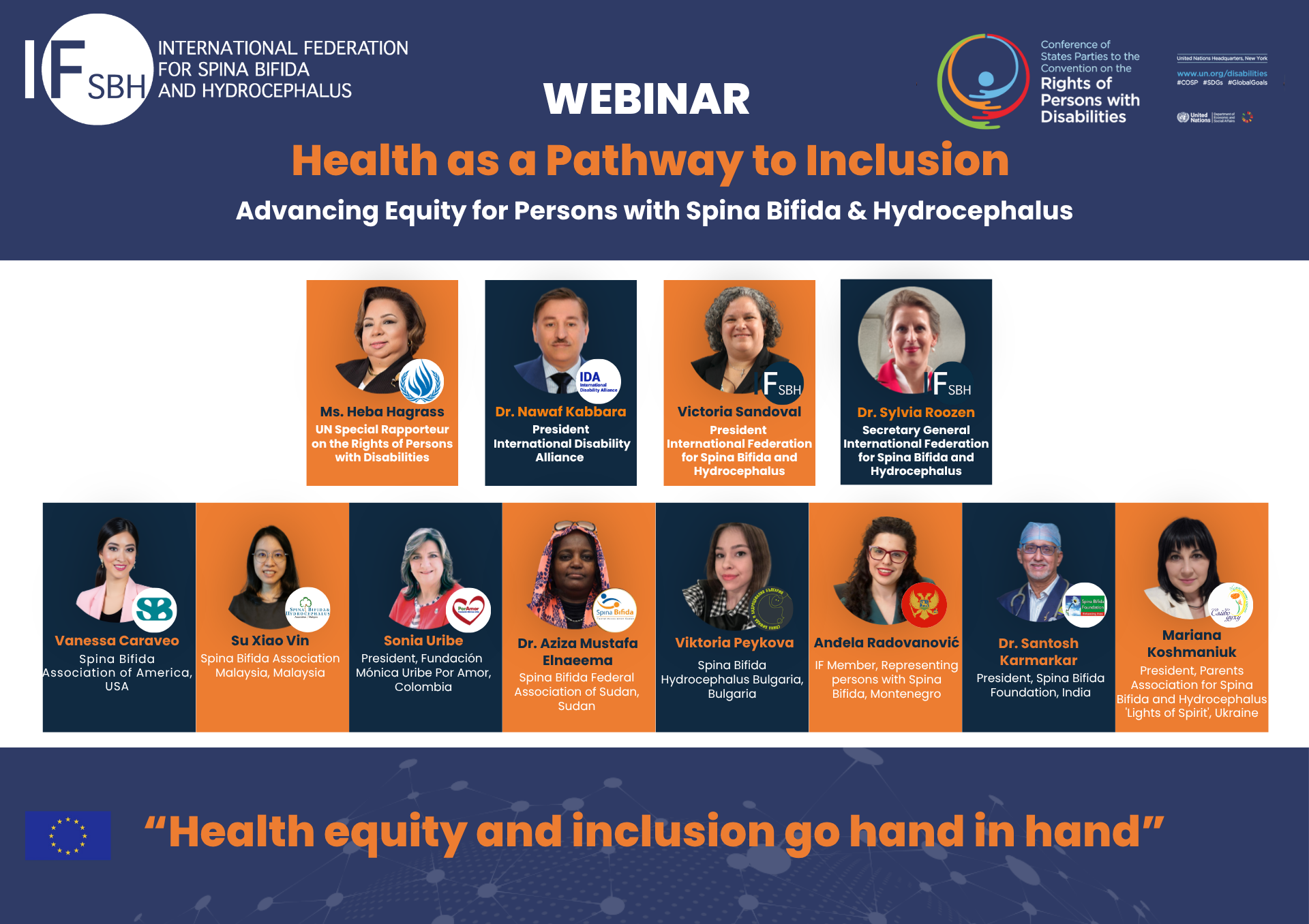
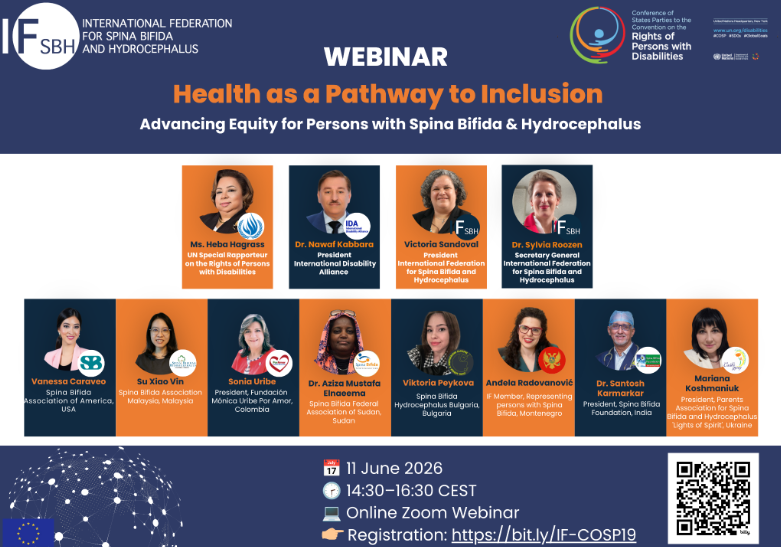
On 11 June 2026, the International Federation for Spina Bifida and Hydrocephalus hosted an Informal COSP19 Side Event called “Health as a Pathway to Inclusion: Advancing Equity for Persons with Spina Bifida & Hydrocephalus”. The webinar brought together speakers and advocates from across the global SBH community to explore the role of health equity in advancing inclusion and implementing the principles of the United Nations Convention on the Rights of Persons with Disabilities (UNCRPD), on the 20th anniversary since its adoption.
Opening Remarks
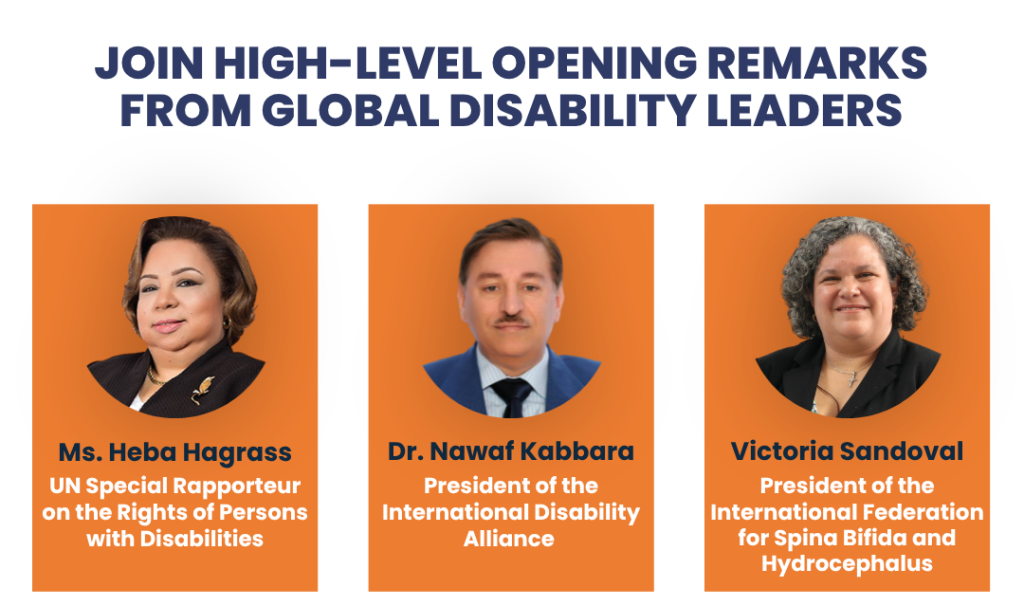
The webinar was opened with a speech by the UN Special Rapporteur on the Rights of Persons with Disabilities, Ms. Heba Hagar, who described health as a fundamental right that facilitates dignity, autonomy, and inclusion for persons with disabilities, including those with spina bifida and hydrocephalus, highlighting how equitable access to healthcare, rehabilitation, and support throughout one’s life is essential to the full enjoyment of all human rights. The International Disability Alliance’s President, Dr. Nawaf Kabbara, emphasized that health equity must be developed in collaboration with persons with disabilities and their representative organizations at all levels, to advance inclusive, rights-based, and person-centered health systems. IF President, Victoria Sandoval, highlighted that for many people with disabilities around the world, essential health services remain inaccessible or unaffordable, meaning that we cannot fully participate in society if we are excluded from healthcare. This is especially true for persons living with spina bifida and hydrocephalus, as these are complex, lifelong conditions that require access to multidisciplinary care throughout all stages of life: “Health equity and inclusion go hand in hand”.
Global Speakers
The webinar was moderated by Dr. Sylvia Roozen, IF Secretary General. In her introduction, she highlighted the importance of situating the discussion within key international and regional frameworks, including Universal Health Coverage (UHC), the WHO Global Disability Action Plan, the WHO Global Report on Health Equity for Persons with Disabilities, the European Union Strategy for the Rights of Persons with Disabilities, and the UNCRPD. These frameworks reflect important progress over the past 20 years, including growing recognition of health as a central element of disability inclusion.
However, she also underlined that despite these commitments, significant gaps remain in implementation, particularly in ensuring access to coordinated, lifelong, multidisciplinary care.
IF member representatives from around the world were invited to share their lived experiences and insights on the main challenges and key progress in health equity since the adoption of the UNCRPD.
This discussion is particularly important because some specific barriers are still not fully addressed in existing policies and initiatives. Therefore, the lived experiences shared today help to highlight these gaps and bring a clearer understanding of what is still needed in practice.
Panelists:
- Anđela Radovanović – IF Member, Representing persons with Spina Bifida in Montenegro
- Sonia Uribe – President, Fundación Mónica Uribe Por Amor, Colombia
- Vanessa Caraveo – Chairwoman IF International Adult Working Group, Spina Bifida Association of America, USA
- Dr. Santosh Karmarkar – President, Spina Bifida Foundation, India
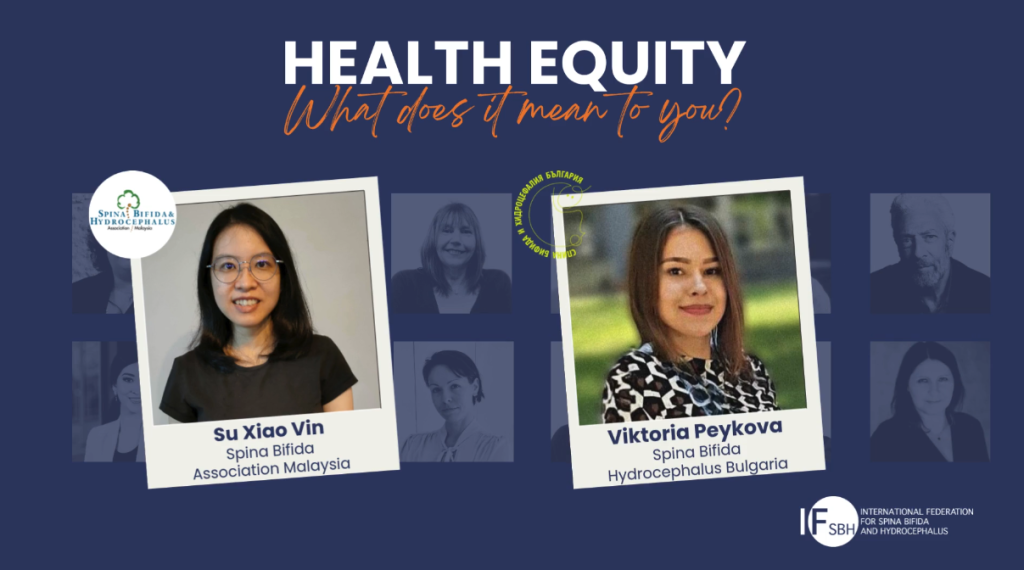
- Viktoria Peykova – Spina Bifida Hydrocephalus Bulgaria
- Su Xiao Vin – Spina Bifida Association Malaysia
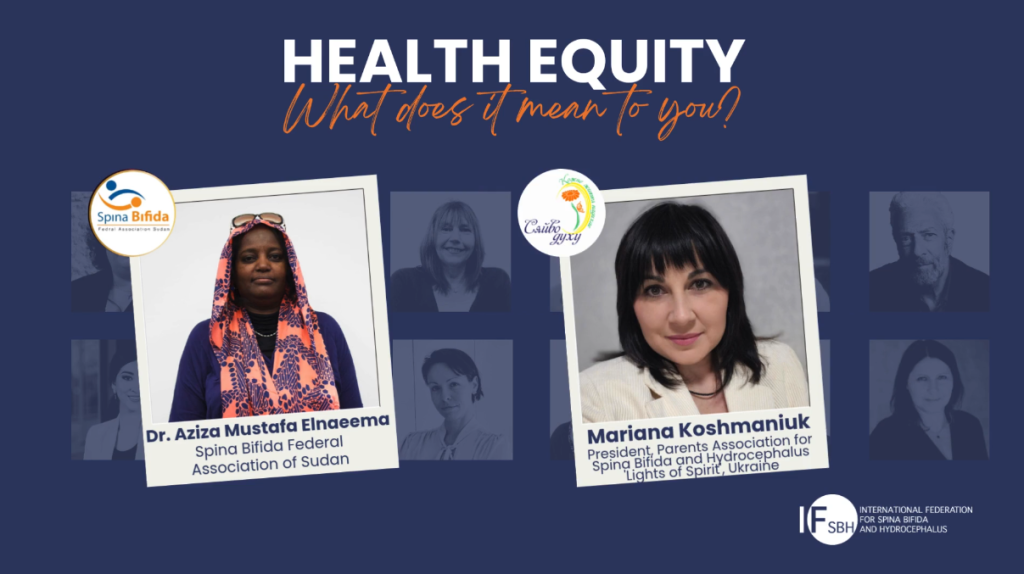
- Mariana Koshmaniuk – President, Parents Association for Spina Bifida and Hydrocephalus ‘Lights of Spirit’, Ukraine
- Dr. Aziza Mustafa Elnaeema – Spina Bifida Federal Association of Sudan
Healthcare services accessibility: Montenegro & Colombia
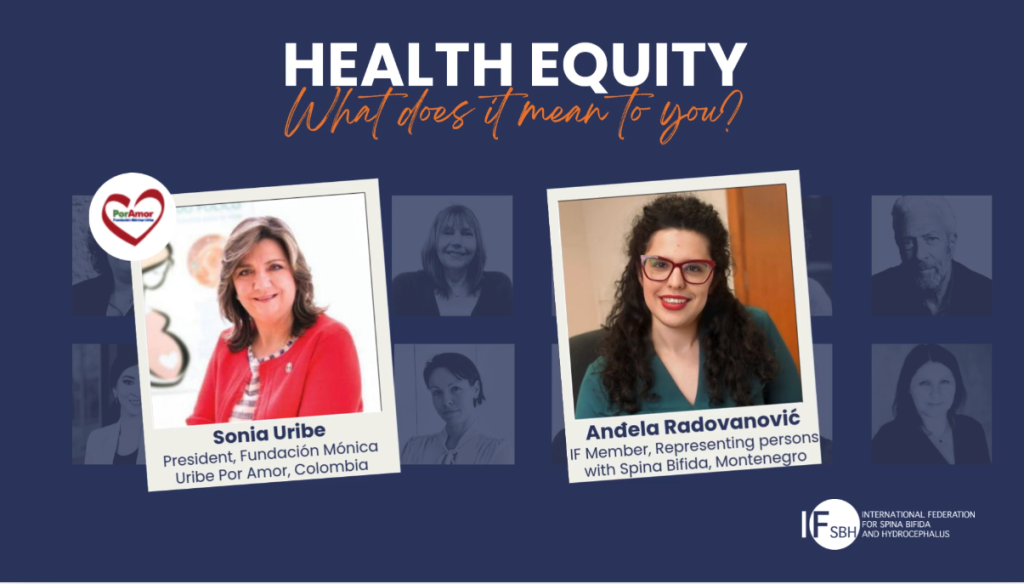
Panelists explored day to day and system level barriers that persons with spina bifida and hydrocephalus face in accessing health services, and highlighted local initiatives and policies that improve access to health in Montenegro and Colombia.
They have also identified the biggest advances and the remaining gaps since 20yr UNCRPD in healthcare access, highlighting that while progress remains at an early stage in Montenegro, the creation of a stronger and more united SBH community is helping to amplify the voices of persons with spina bifida and hydrocephalus and drive meaningful change. In Colombia, speakers stressed that achieving health equity requires collaboration across sectors, with governments, healthcare providers, civil society and communities working together to create sustainable and inclusive solutions.
Assistive products and support systems: US & India
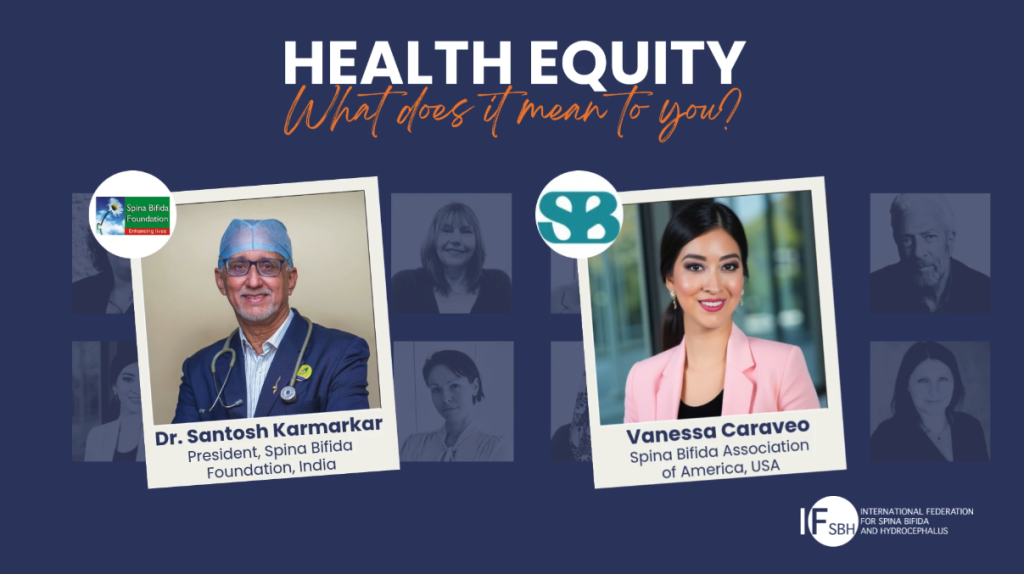
This session explored the challenges faced when accessing assistive products, from a personal and healthcare provider perspective. The speakers also presented the specific gender-related health needs for women and girls and the innovations at the policy or community level that improve access to assistive products.
As a physician working in a highly unequal and largely
privatised health system, I cannot overstate the importance of health equity. For conditions like spina bifida, equitable access is essential and should be a fundamental right for all – Dr. Santosh Karmarkar
The participants in the webinar then engaged through an interactive poll, sharing what progress they have seen in their countries since the adoption of the UNCRPD 20 years ago. Responses highlighted increased awareness of disability rights, improved access to assistive devices and medical products, greater recognition of persons with disabilities as experts in their own lives, and positive developments in coordinated services and healthcare support. At the same time, participants noted that significant challenges remain, particularly regarding implementation, funding, accessibility and equitable access to services.
Social inclusion & participation: Bulgaria & Malaysia
Panelists explored how healthcare access can affect school attendance and participation, and what helps people with spina bifida and hydrocephalus access higher education and participate fully in student life. They also shared personal experiences on how access to health services affects opportunities for employment and the barriers still limiting equal access.
Health equality means that every person, regardless of disability, has the same opportunity to thrive, learn, and pursue their dreams with dignity, support, and respect – Viktoria Peykova
Health equity begins with equal access — to resources, education, employment opportunities, and environments that support well-being for all – Su Xiao Vin
Equity in times of conflict and crisis: Ukraine & Sudan
During the last thematic session speakers explored how persons with SBH access health and support services during conflict or displacement and which are the most urgent needs for improving health equity in crisis situations. They also shared perspectives on what helps ensure continuity of care during crisis contexts and the existing gaps in emergency preparedness and healthcare response for persons with disabilities. They have also reflected on the lessons learned on how prepared systems protect persons with SBH in crisis context.
Closing Reflections
The webinar concluded that despite great progress since the adoption of the UNCRPD, gaps persist across countries. In order to close these gaps, lived experiences must inform policies and strong advocacy is needed to advance health equity for persons living with spina bifida and hydrocephalus.
Though our SBH Health Equity Project, IF remains committed to gather experiences and evidence from the SBH community, identify barriers and good practices, strengthen advocacy for equitable and inclusive health systems, and promote collaboration across regions and sectors.
You can watch the recording of the webinar here.