1 August 2026
Since launching the SBH Health Equity Project earlier this year, IF has continued working with members and the wider SBH community to better understand barriers to equitable healthcare and identify opportunities for change.
Through member meetings, surveys, and discussions across regions, the project is building a global picture of the challenges experienced by people with spina bifida and hydrocephalus (SBH), while also highlighting promising practices and solutions already taking place in different contexts.
Listening to the experiences of the SBH community
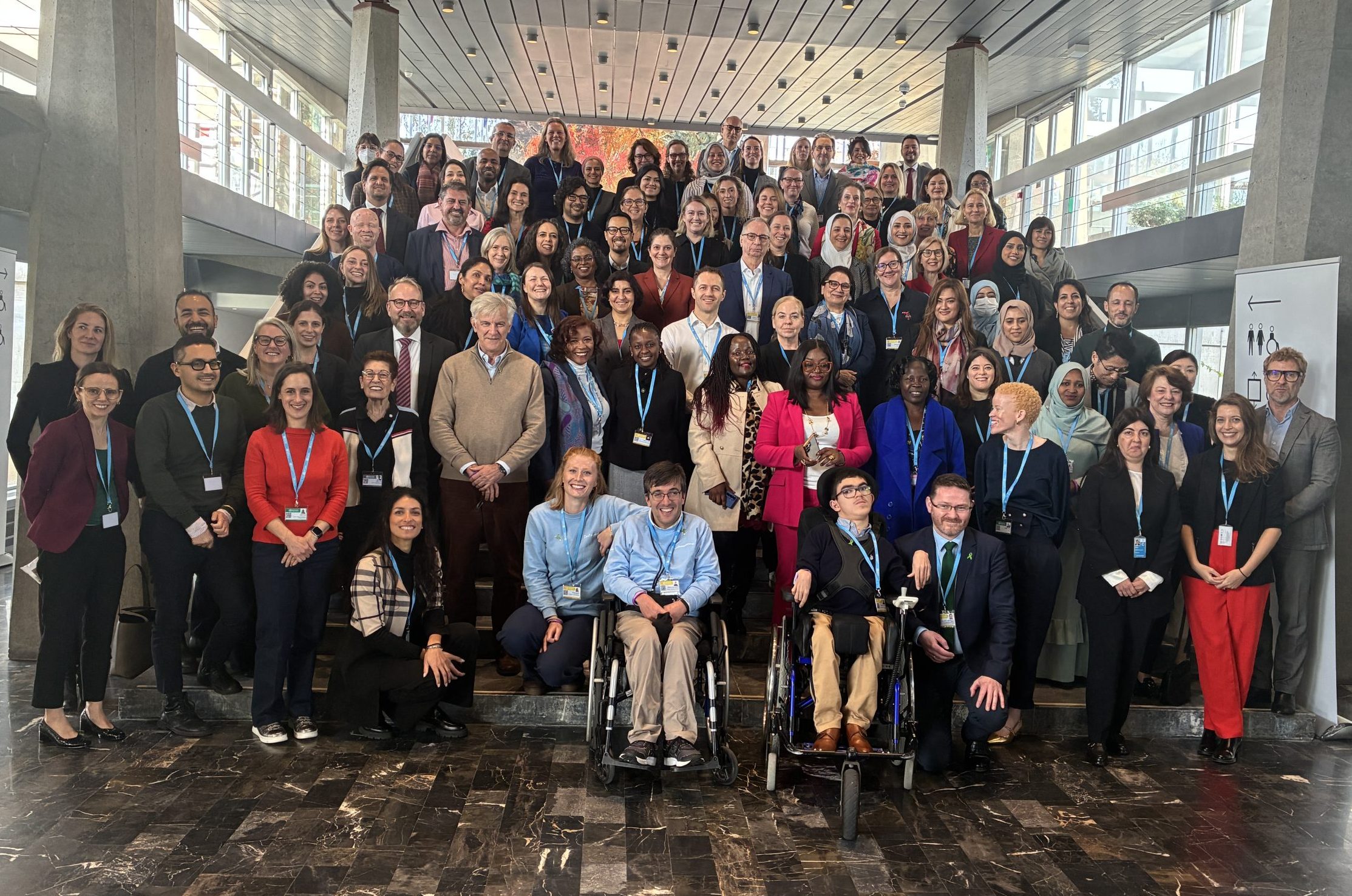
The second Health Equity Project meeting brought together IF members from around the world to validate early findings and explore the priorities identified through the first phase of data collection.
Feedback from members confirmed that barriers to healthcare access remain a major concern across many countries. More than half of survey respondents identified healthcare availability and accessibility as a key challenge, followed by financial barriers linked to the cost of care, services, and essential products.
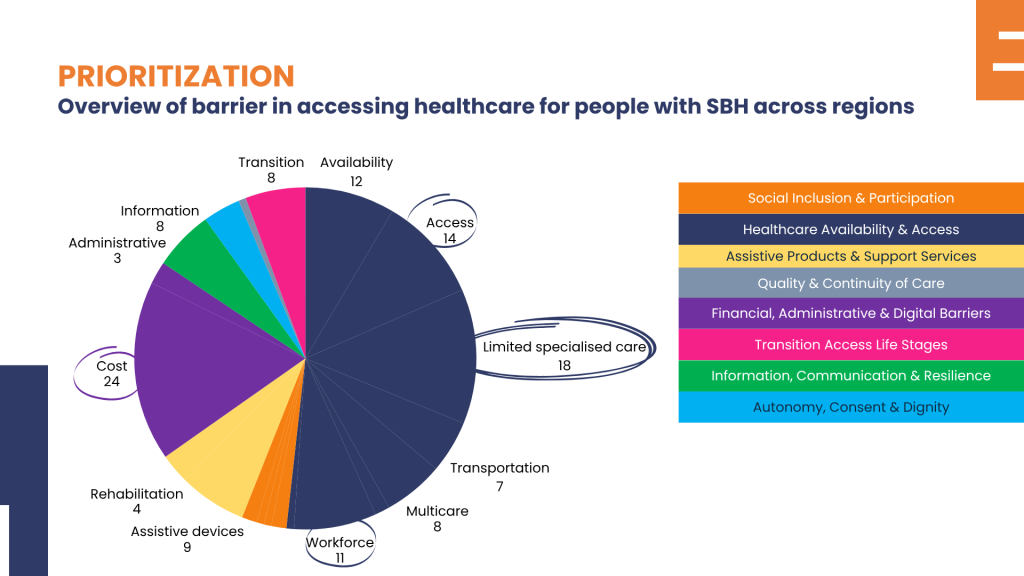
Members highlighted several interconnected challenges, including:
- Limited availability of specialised SBH care, particularly for adults
- Lack of multidisciplinary services and coordination between healthcare providers
- Long distances and travel requirements to access appropriate care
- Waiting times and limited healthcare system capacity
- Challenges accessing assistive products, rehabilitation, and essential support services
- Gaps in transition from paediatric to adult healthcare
- Financial and administrative barriers affecting continuity of care
These findings reflect the diversity of healthcare systems and realities across regions, while showing common challenges faced by many people living with SBH.
Connecting SBH health equity with global advocacy
While the Health Equity Project is rooted in the experiences of the SBH community, it also contributes to wider discussions on disability inclusion, human rights, and equitable healthcare.
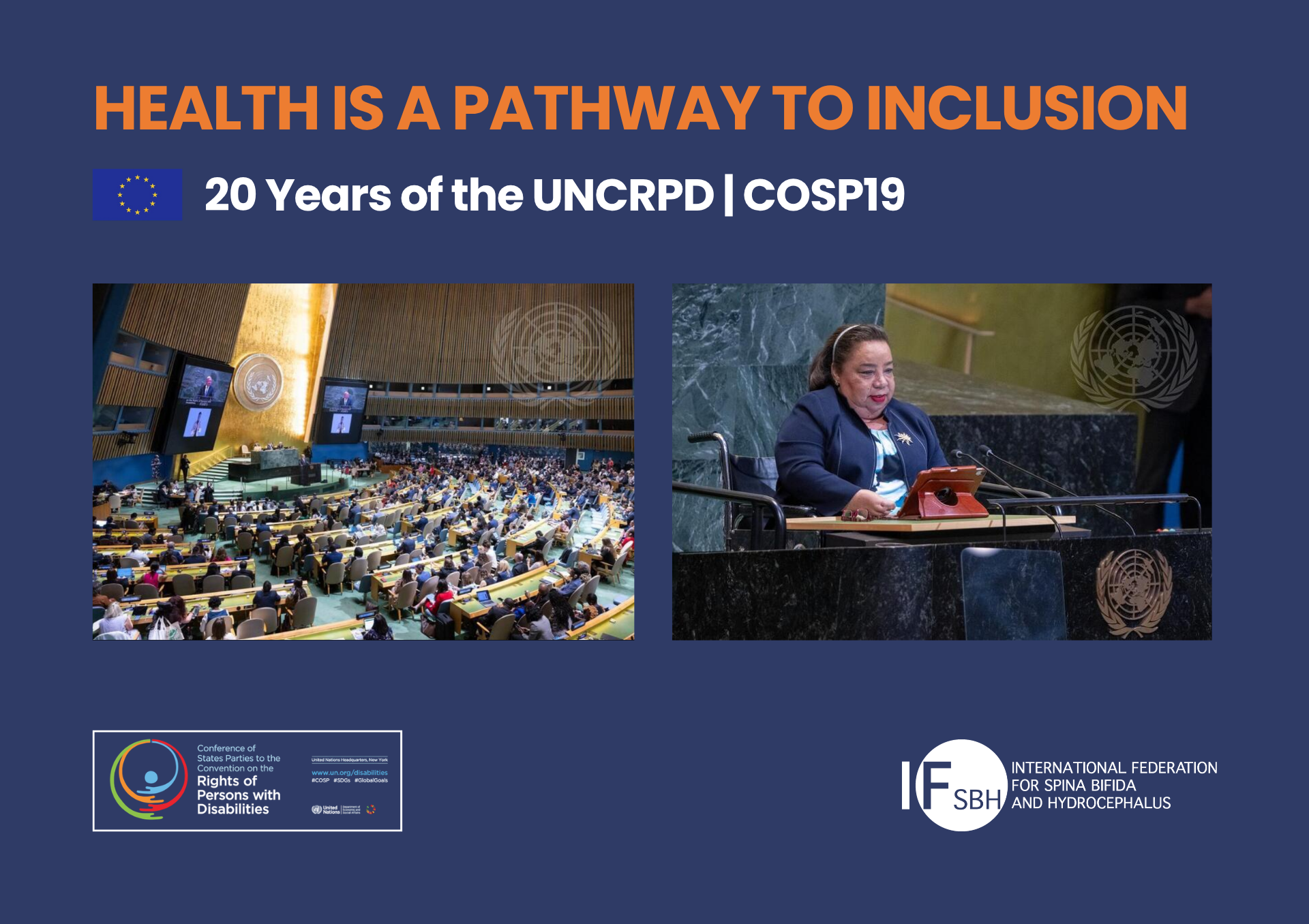
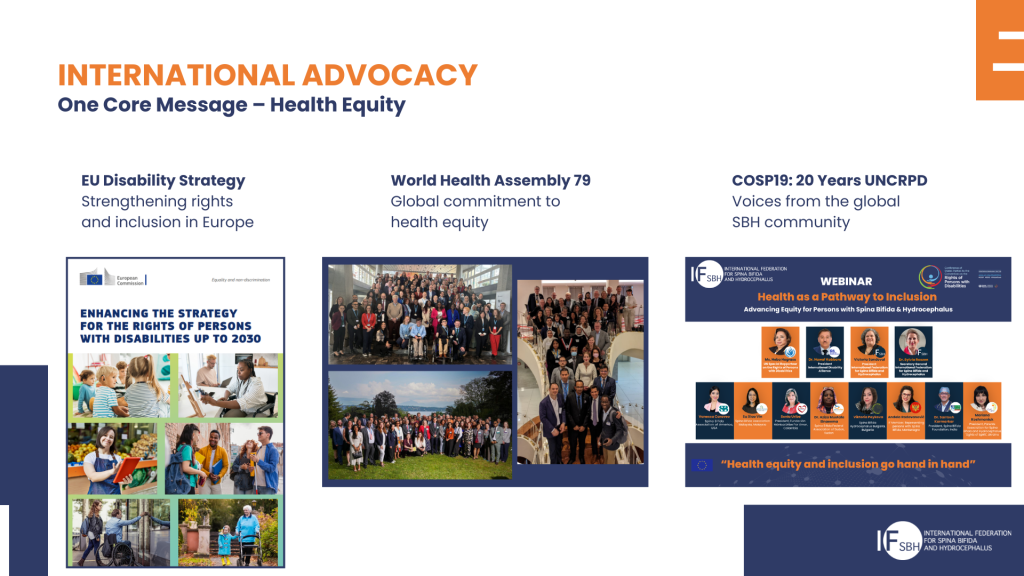
In 2026, IF continued to bring health equity perspectives to international advocacy spaces, including discussions around the 20th anniversary of the United Nations Convention on the Rights of Persons with Disabilities (UNCRPD). Health equity was highlighted as a key foundation for inclusion, participation, and the full realisation of rights for persons with disabilities.
During the 19th Session of the Conference of States Parties to the UNCRPD (COSP19), IF organised an informal side event entitled “Health as a Pathway to Inclusion: Advancing Equity for Persons with Spina Bifida & Hydrocephalus”. The event brought together advocates, experts, and representatives from different regions to discuss barriers to healthcare access, the importance of lifelong multidisciplinary care, and the role of lived experience in shaping more inclusive health systems.
These discussions reinforced a key message of the Health Equity Project: achieving inclusion requires more than removing physical or social barriers — it also requires ensuring that people with SBH can access the healthcare, rehabilitation, assistive products, and support services they need throughout their lives.
From challenges to solutions: sharing good practices
The third Health Equity Project meeting focused on identifying resources, programmes, and approaches that can contribute to more equitable care.
Through regional breakout discussions, members shared examples of initiatives and practices from their countries, including:
- Professional training programmes to improve healthcare providers’ knowledge of SBH
- Multidisciplinary and transition clinics supporting continuity of care
- National guidelines and educational resources for patients, families, and healthcare professionals
- Government support schemes and reimbursement mechanisms
- Peer support networks and the role of member organisations in filling gaps and advocating for change
These discussions highlighted the important role of SBH organisations in supporting families, raising awareness, and working alongside healthcare systems to improve access and quality of care.
Making health equity visible
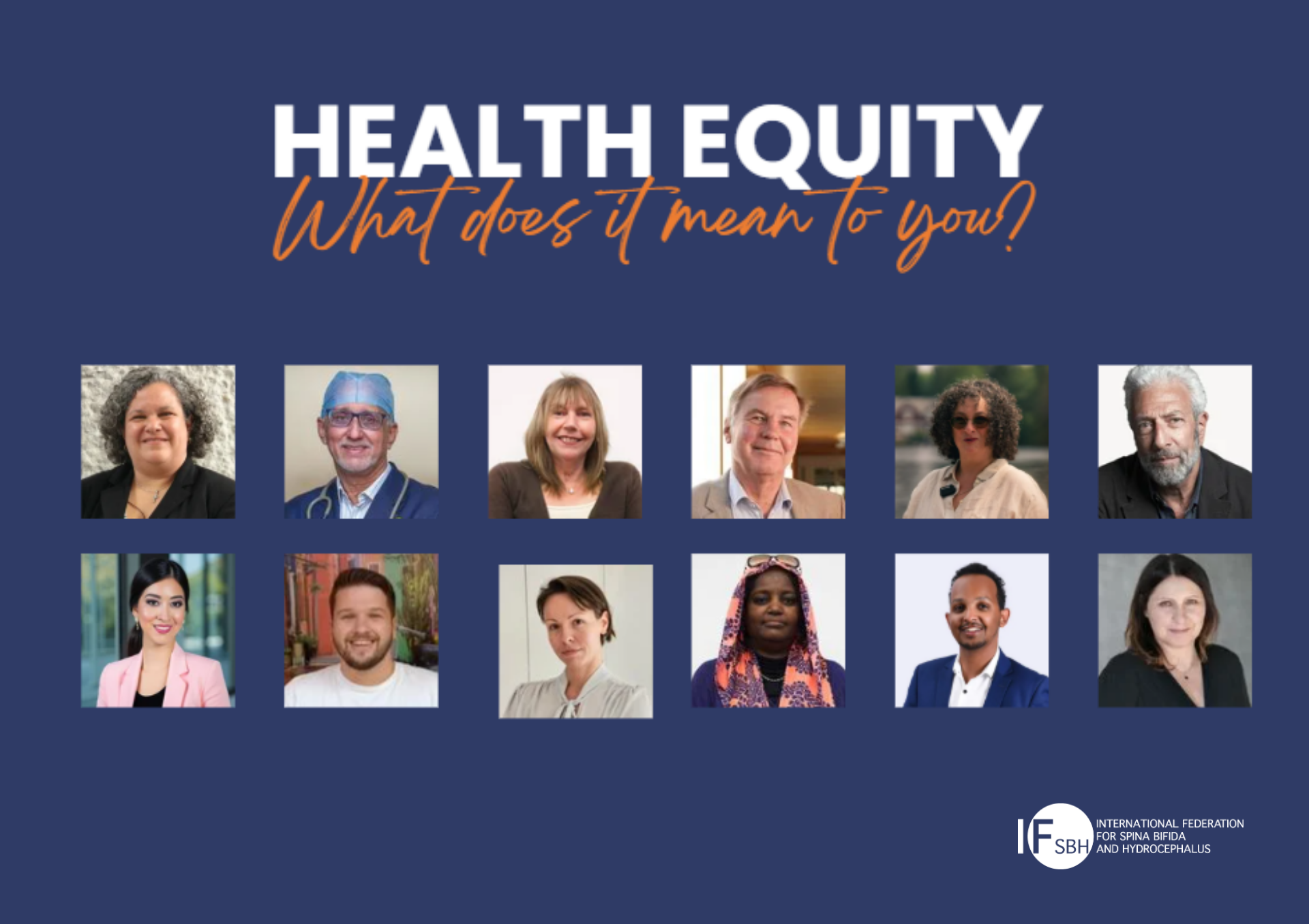
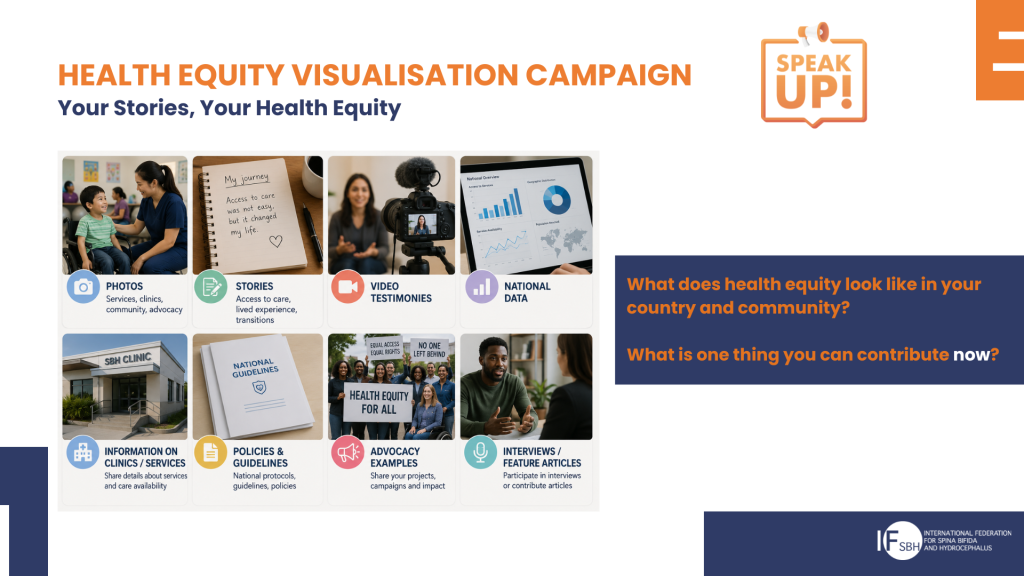
As part of the project, IF is also developing a Health Equity Visualisation Campaign to bring these realities to a wider audience.
The campaign aims to move beyond data and make health equity visible through real-life experiences, showing what access to healthcare looks like in practice for people with SBH.
Members are invited to share examples from their countries or communities, including:
- Photos or short videos
- Campaign materials
- Local initiatives
- Lived experience stories
- Examples of good practices or solutions
These contributions will help illustrate both the barriers that exist and the progress being made across different contexts.
Share your health equity example
Do you know of a programme, initiative, resource, or lived experience that shows what health equity looks like in practice? Help us make health equity visible by sharing examples from your country or community.
- Send your examples to: [email protected]
What comes next
The SBH Health Equity Project will continue gathering information and engaging with members throughout 2026.
Upcoming activities include:
- Continued collection of country-level information, good practices, and lived experiences
- Further discussions with IF members and SBH organisations to explore key barriers and possible solutions
- Development of preliminary findings to be shared with the SBH community
- Presentation of project outcomes at the 31st International Conference on Spina Bifida and Hydrocephalus in October 2026
The project will continue into 2027, with further opportunities to deepen data collection, explore country experiences, and develop recommendations to support advocacy and action.
A collective effort for more equitable healthcare
The SBH Health Equity Project is built on the knowledge and experiences of the global SBH community. By listening, sharing solutions, and working together, IF and its members aim to strengthen advocacy and support health systems where everyone with SBH can access the care they need, throughout their lifetime.