26 October 2026
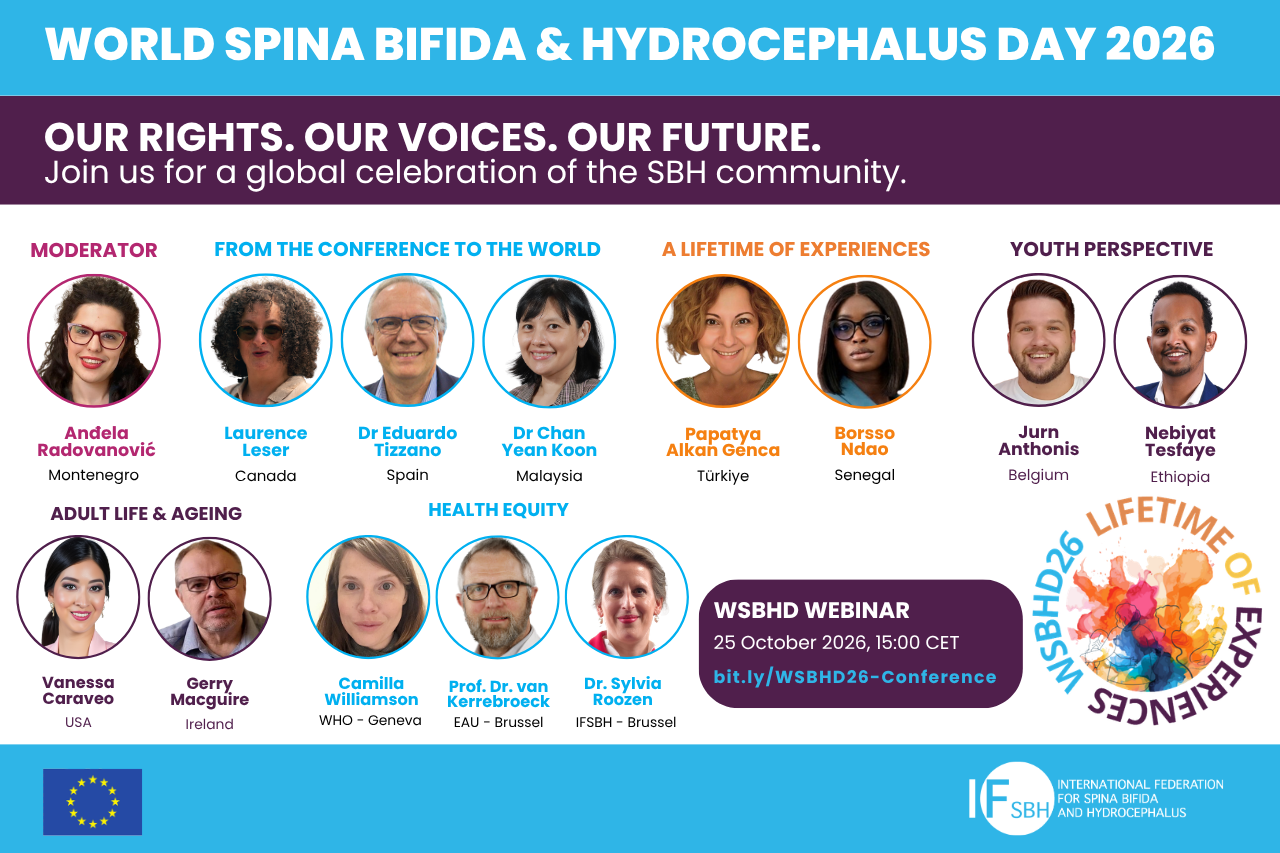
Celebrating World Spina Bifida and Hydrocephalus Day 2026
On 25 October 2026, the International Federation for Spina Bifida and Hydrocephalus (IFSBH) brought the discussions from the 31st International Conference on Spina Bifida and Hydrocephalus in Montréal, Canada, to the wider global SBH community through its World Spina Bifida and Hydrocephalus Day (WSBHD) webinar.
Under the theme A Lifetime of Experiences: From Preconception to Ageing, speakers from around the world explored lived experiences, lifelong support needs, health equity and disability rights.
Opening the webinar, IFSBH Secretary General Dr Sylvia Roozen reminded participants that SBH is not a condition requiring attention at just one stage of life. People need continuous care, support and opportunities as their needs evolve. She also emphasised the importance of bringing lived experiences into decision-making and working together to turn awareness into meaningful action.
Moderated by Anđela Radovanović (disability rights advocate, Montenegro), the webinar brought together people with lived experience, advocates and professionals to reflect on progress, persistent barriers and priorities for the future.
From the Conference to the World
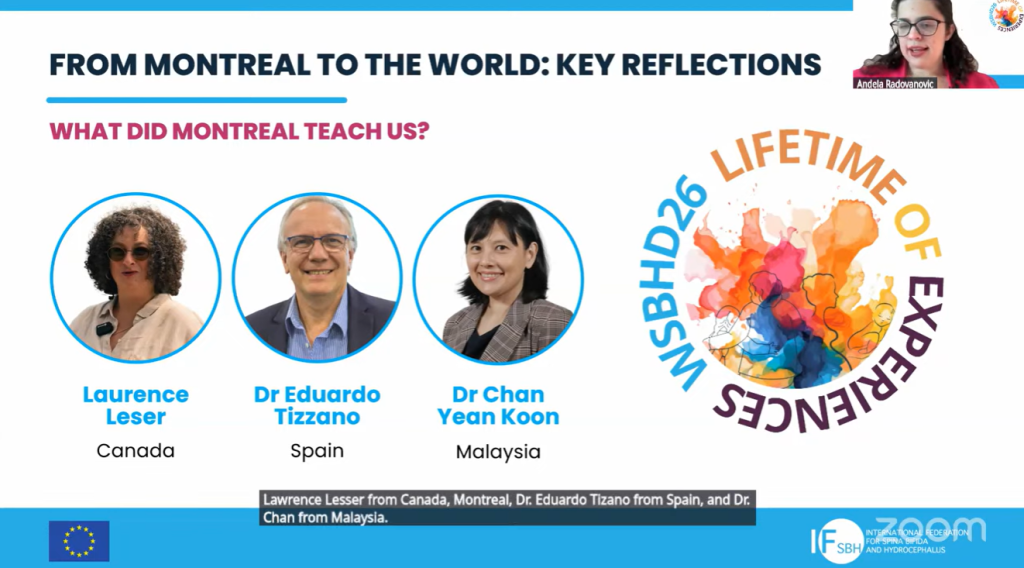
Reflecting on the 31st International Conference on Spina Bifida and Hydrocephalus, Laurence Leser (ASBHQ, Canada), Dr Eduardo Tizzano (member IFSBH Genetics Advisory Group, Spain) and Dr Chan Yean Koon (SiBIAM, Malaysia) highlighted the value of bringing together people with SBH, advocacy organisations and scientific experts.
The conference provided opportunities to exchange knowledge across disciplines, share experiences from different countries and strengthen partnerships. Despite differences in healthcare systems and local contexts, speakers noted that many of the community’s challenges and aspirations are shared worldwide.
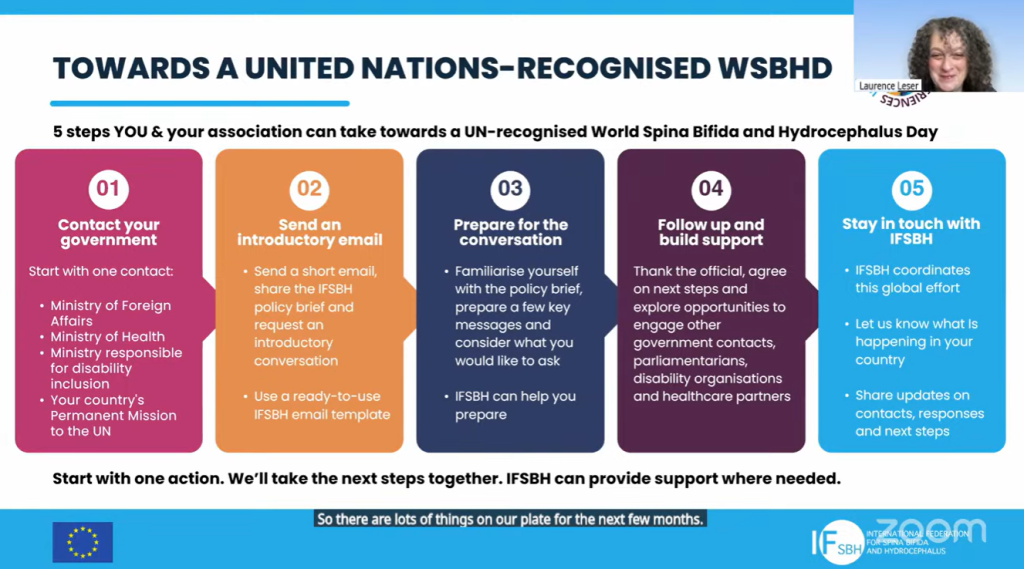
A key message emerged: rights and commitments must translate into real improvements in people’s lives. Continued international collaboration and advocacy, including efforts towards United Nations recognition of WSBHD, are essential to moving this work forward.
A Lifetime of Experiences: Seeing SBH Across Life Stages
Papatya Alkan Genca (Spina Bifida Derneği, Türkiye) and Borsso Ndoa (Spina Bifida et Hydrocephalie Sénégal) reflected on living with SBH and supporting family members, highlighting progress in knowledge, community-building and the understanding of disability.
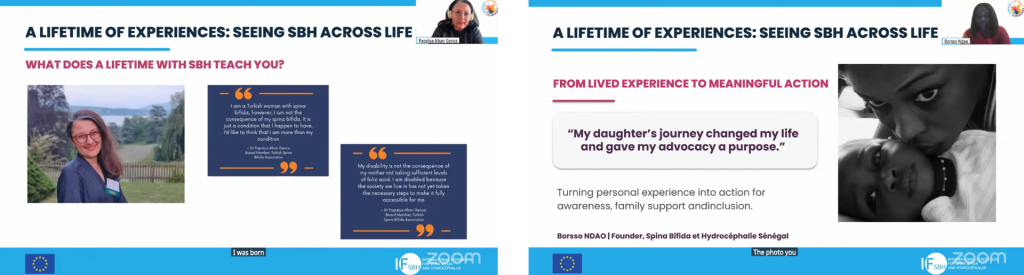
Greater awareness and stronger international connections have helped people and families find information, support and a sense of belonging. The shift towards a social and rights-based understanding of disability has also helped challenge purely medical perspectives.
However, gaps remain in lifelong care, the transition to adult services and support for families. Borsso also highlighted the need to address stigma, improve access to specialised care and ensure families receive clear information following a diagnosis.
Their contributions reinforced that inclusion must extend to everyone, including people who need lifelong assistance. Every person with SBH deserves dignity, care, opportunities and the right to participate in society.
Youth Perspective: What Does the Theme Mean to Us?
IFSBH Youth Group members Jurn Anthonis (Vlaamse Vereniging voor Spina Bifida en Hydrocephalus, Belgium) and Dr Nebiyat Tesfaye (ReachAnother Foundation, Ethiopia) shared perspectives on independence, identity, education, employment and participation.
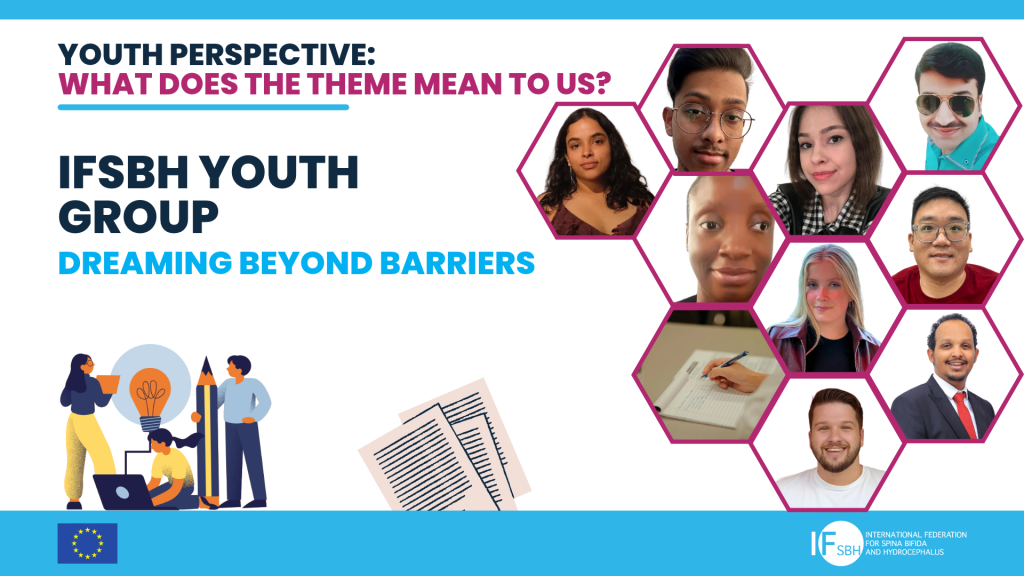
Jurn highlighted the role of family support and opportunities to develop practical skills in building confidence and independence. His message “You have a disability, you are not your disability”, encouraged young people to recognise their potential while finding their own path.
Nebiyat drew attention to the barriers created by limited access to healthcare, education and assistive devices, as well as stigma and discrimination. He also highlighted the difficulties young people can face when transitioning from paediatric to adult healthcare.
Both speakers stressed that young people with SBH must be recognised not only as recipients of support, but also as decision-makers and agents of change. As Nebiyat reminded the audience: “Do not make a decision about us, without us”.
Adult Life: The Experiences We Don’t Talk Enough About
Vanessa Caraveo (SBAA, USA) and Gerry Maguire (SBHI, Ireland), Chair and Co-Chair of the IFSBH Adult Working Group, addressed challenges that can continue or emerge throughout adulthood.
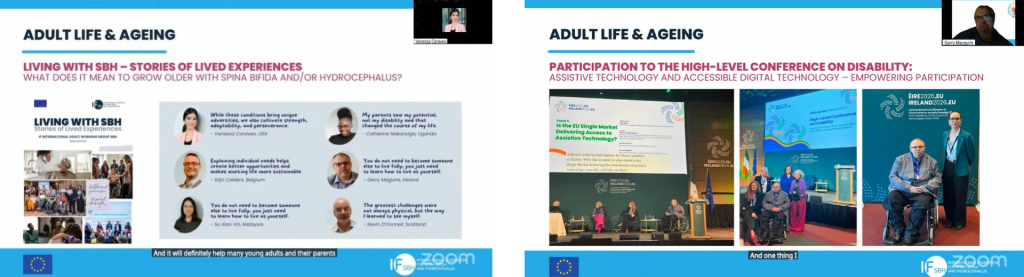
Vanessa highlighted the difficulties of transitioning from paediatric to adult healthcare, including losing familiar care teams and having to navigate complex systems independently. She stressed the importance of preparing for this transition early and recognising needs that extend beyond physical health, including mental health, employment and social connection.
Gerry reflected on his life with spina bifida and the importance of recognising each person’s potential. He also highlighted the need for appropriate continence products throughout life, emphasising that essential products and support must not be overlooked as healthcare systems pursue more advanced solutions.
Their contributions underlined that people with SBH need accessible, continuous care and support throughout adulthood. They also called for greater recognition of the psychological impact of living with a lifelong condition and for systems that enable people to participate fully in society.
Health Equity: From Rights to Reality — 20 Years of the UNCRPD
Representatives from the World Health Organization (WHO), the European Association of Urology (EAU) and IFSBH explored the barriers that prevent people with disabilities, including people with SBH, from accessing appropriate healthcare.
Camilla Williamson (WHO) highlighted persistent inequalities, including high out-of-pocket costs, geographical barriers, shortages of essential products and insufficient training among healthcare professionals. She emphasised that inclusion must be an integral part of health systems and universal health coverage.
Prof. Dr Van Kerrebroeck (EAU) highlighted the importance of improving access to appropriate continence care and strengthening collaboration between professional organisations, disability advocates and policymakers.
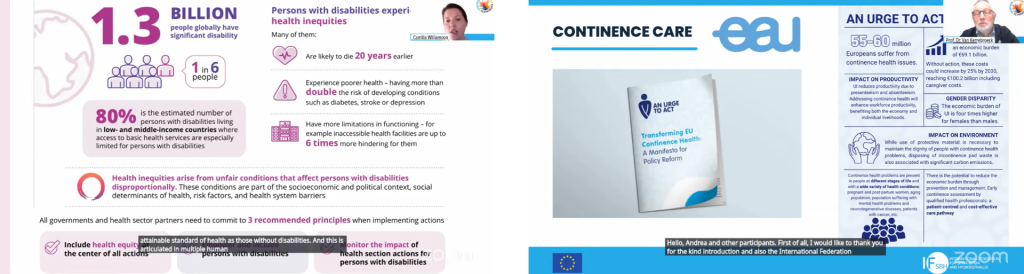
Dr Sylvia Roozen brought the discussion back to people’s everyday experiences. Examples from Bulgaria and Colombia illustrated how reimbursement gaps, administrative barriers and delayed supplies can affect health, independence and participation. She emphasised the importance of recognising catheters as essential assistive technology and ensuring that people can access the products they need, when they need them and at a cost they can afford.
Twenty years after the adoption of the UN Convention on the Rights of Persons with Disabilities (UNCRPD), the message was clear: recognising rights is not enough; those rights must translate into accessible healthcare and practical support.
WSBHD Challenge: Our Community in Action
The WSBHD Challenge showcased the creativity, diversity and commitment of IFSBH member associations around the world. Through local activities and contributions, members raised awareness, celebrated people with SBH and promoted inclusion and equal opportunities.
In total, 68 contributions highlighted the strength of the global SBH community and the importance of sharing experiences across countries and generations.
Explore the challenge contributions and member activities.
From Reflection to Action
Across the webinar, one message stood out: a lifetime of experiences with spina bifida and hydrocephalus is about much more than a diagnosis. It is about rights, aspirations, relationships and opportunities to live fulfilling lives.
The discussions highlighted the need to listen to people with lived experience, strengthen collaboration across countries and sectors, address persistent inequalities and ensure access to appropriate care and support throughout life. People with SBH, including young people and adults, must be recognised as active participants in shaping the policies and services that affect them.
WSBHD is an opportunity to sustain this collective effort throughout the year, including continued advocacy for United Nations recognition of the day.
Looking ahead, the global SBH community will meet again at the 32nd International Conference on Spina Bifida and Hydrocephalus in Slovakia in October 2028, building on the connections and shared commitments strengthened in Montréal.
Together, we can work towards a more inclusive future in which every person with SBH has the rights, care, support and opportunities to thrive throughout their life.
Watch the webinar
Did you miss the WSBHD 2026 global webinar? Watch the livestream on YouTube.
Help make WSBHD a United Nations-recognised day
Every voice counts. You and your association can help raise awareness and encourage governments to support United Nations recognition of World Spina Bifida and Hydrocephalus Day.