6 March 2026
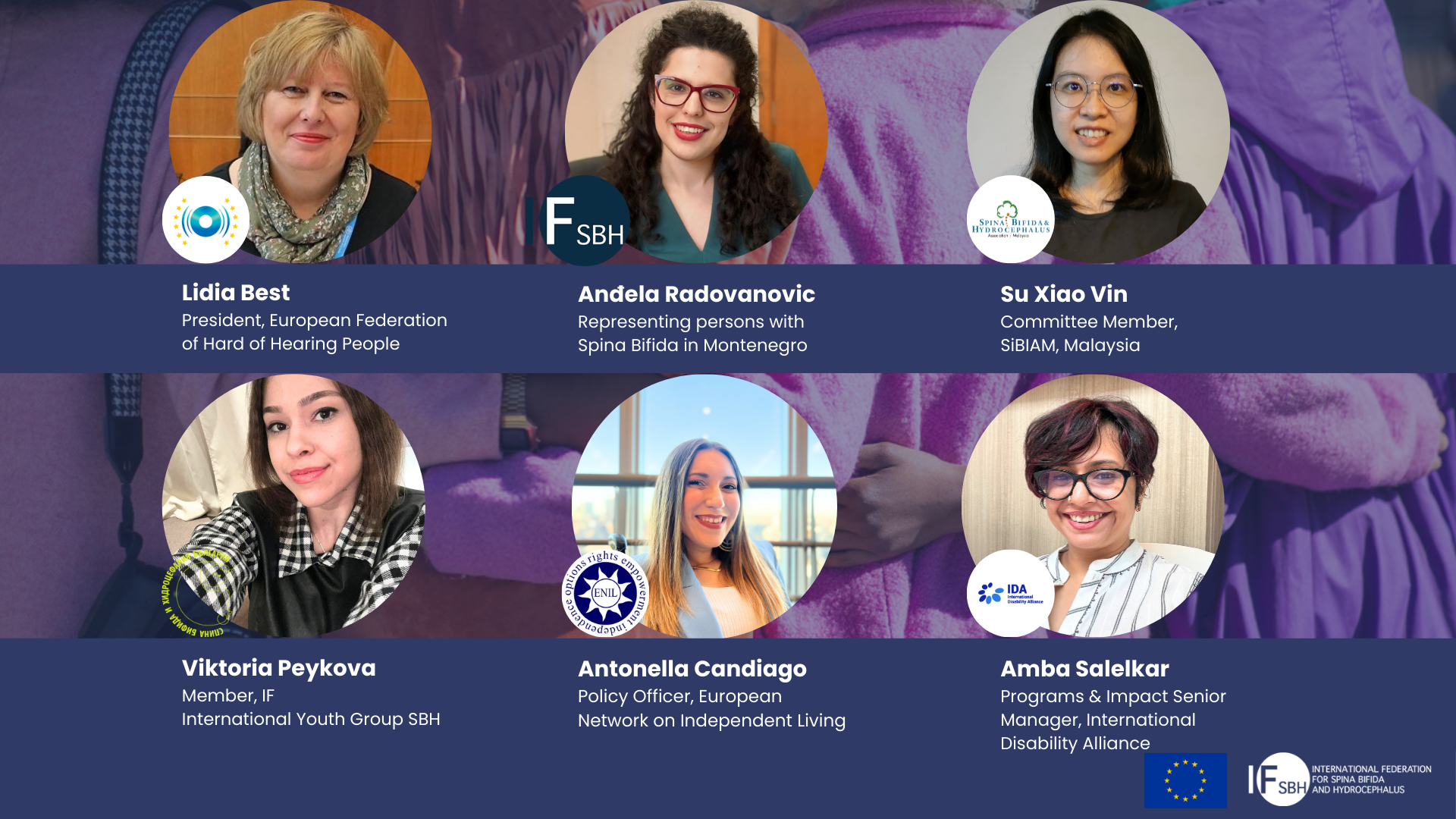
On 6 March 2026, the International Federation for Spina Bifida and Hydrocephalus hosted its International Women’s Day webinar, bringing together women with disabilities, advocates, policy-makers, and allies from around the world. Guided by the UN theme “Rights. Justice. Action. For ALL Women and Girls”, the event offered a global platform to amplify lived experiences, explore systemic barriers, and showcase solutions for meaningful inclusion. The webinar united a diverse pool of partner organisations, including the European Federation of Hard of Hearing People (EFHOH), the European Network on Independent Living (ENIL) and the International Disability Alliance (IDA). These organisations, together with IF members’ representatives from Bulgaria, Montenegro and Malaysia, highlighted common priorities and ways to bridge the gaps between systemic barriers and a world of equal opportunities.
Inspiring Moderation and Speakers
The webinar was moderated by Vanessa Caraveo, who also delivered the keynote presentation. Vanessa is currently Chairwoman of the IF Working Group on Ageing with SBH and actively involved in advocacy with her expertise and leadership.

The panel featured a diverse group of experts and advocates:
- Anđela Radovanović – IF Member, Representing persons with Spina Bifida in Montenegro
- Lidia Best – President, EFHOH
- Antonella Candiago – Policy Officer, ENIL
- Su Xiao Vin – Committee Member, SiBIAM, Malaysia
- Amba Salelkar – Programs & Impact Senior Manager, IDA
- Viktoria Peykova – Member of the International Youth Group SBH / Spina Bifida and Hydrocephalus Bulgaria (SBHB)
Together, they discussed barriers in education, employment, public life, legal protection, and healthcare, offering insights into both challenges and progress in their respective contexts.
Key Themes and Insights
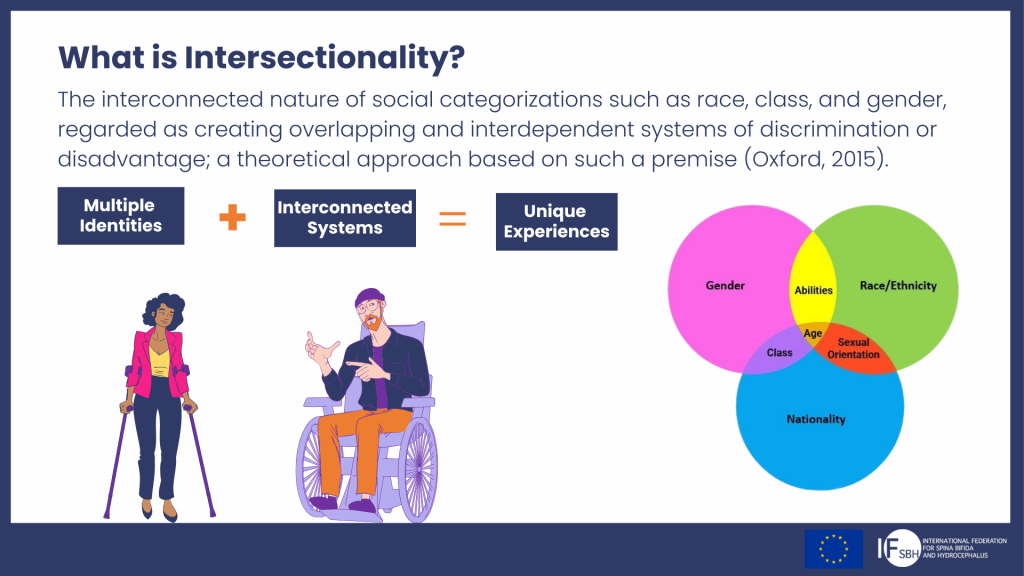
Panelists explored the concept of intersectionality, recognising how gender, disability, socio-economic status, and other factors interact to create overlapping discrimination. Core issues identified included:
- Economic inequality, including employment disparities and pay gaps
- Inaccessible infrastructure, affecting public spaces, transport, and housing
- Healthcare gaps, including provider knowledge and lack of tailored information
The audience engaged through interactive polls moments, sharing key words that represent their hopes and dreams for the future.
Another poll found that 75% of respondents feel women with disabilities are not fairly represented in their industries or communities.

Driving Change Through Collective Advocacy
“People with disability are able to shine if they are given the opportunity.” – Su Xiao Vin
“Go to your community, be loud, be brave and speak up for the next generation of girls and women with disabilities!” – Anđela Radovanović
The panel discussion emphasised the importance of:
- Role models and leadership visibility to inspire the next generation
- Legal protections and anti-discrimination measures to ensure access to justice
- Inclusive education and accessible public spaces to remove structural barriers
- Meaningful participation of women with disabilities in decision-making, guided by IF’s ACB pillars: Accommodate, Consult, Believe
Panelists also shared encouraging examples of recent progress in education and community initiatives, highlighting that sustained action is essential to consolidate gains and expand opportunities for women and girls with disabilities.
“It is all about encouragement and representation!” – Lidia Best
“Involving women with disabilities in policy-making is key (beginning, planning and implementation)!” – Antonella Candiago
Closing Reflections
The webinar concluded with a call for intersectional approaches, genuine representation, and strengthened advocacy, reminding participants that empowering women with disabilities benefits communities globally. Speakers’ reflections reinforced the shared commitment to dismantle barriers, amplify voices, and create a world where all women and girls can thrive.
“My message to girls and young women is to believe in themselves.” – Viktoria Peykova
“We all bring value in our own way.” – Amba Salelkar
The IF IWD’s webinar was guided by the UN theme “Rights. Justice. Action. For ALL Women and Girls” and marked a powerful moment to amplify our shared commitment and collective resolutions for the SBH community.
IF remains committed to advancing the rights and empowerment of women and girls with disabilities, continuing to translate dialogue into meaningful, lasting change.
You can watch the recording of the webinar here.