9 October 2026
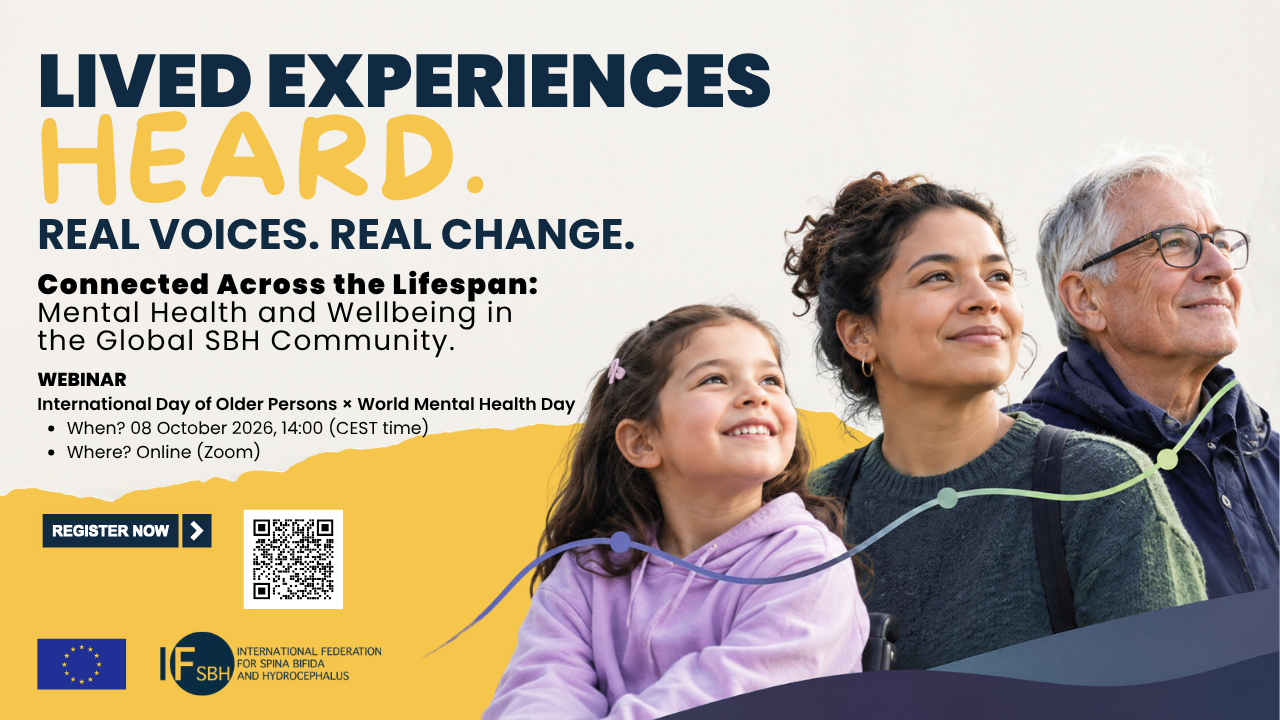
On 8 October 2026, our International Adult Working Group SBH marked the United Nations International Day of Older Persons (IDOP) and the World Mental Health Day (WMHD), supported by WHO, by hosting the IFSBH webinar named “Mental Health and Wellbeing in the Global SBH Community”. The webinar brought together adult advocates, youth advocates, healthcare professionals and members of our global SBH community to explore the lifelong journey of mental wellness. Our panel shared personal stories, broke down stigmas, and highlighted practical ways to nurture mental health at every stage of life with SBH, with a special focus on adults living with SBH. At the same time, the audience had the opportunity to engage with the panelists, asking insightful questions. It was a chance to connect, learn, and grow stronger together as a worldwide SBH community.
Moderated by Nebiyat Tesfaye, member of our International Youth Group SBH, the webinar highlighted the importance of ensuring that people with lived experience are not only represented in discussions on mental health and well-being, but are actively leading them, but also raising awareness about them.
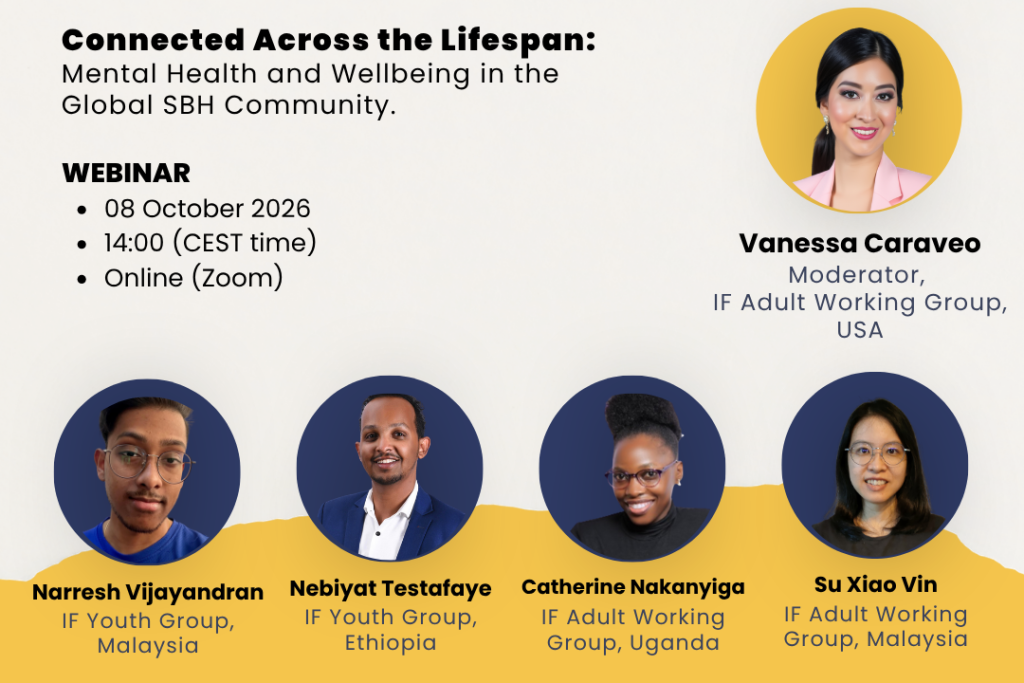
Opening the Conversation
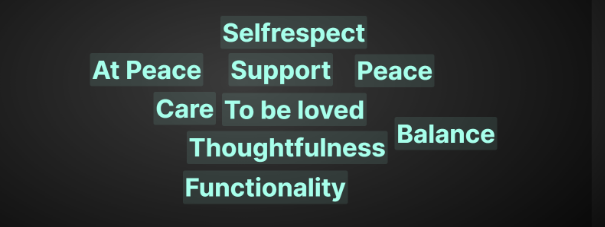
The event opened with welcoming remarks from Nebiyat, who introduced the theme of this year’s webinar dedicated to the International Day of Older Persons (IDOP) and the World Mental Health Day (WMHD) . He reflected on the role of the IFSBH Adult Working Group SBH in advocating for greater inclusion, participation and equal representations for adults living with SBH and on the importance of these two global advocacy endeavours. In the beginning of the webinar, the audience was asked to define what “mental wellness” means for them in one single word and below is a snapshot of the answers received through an online poll:
Furthermore, this year’s UN International Day of Older Persons theme is “The Age of Longevity: Rethinking Systems for Longer Lives” and it calls on us to build a world where growing older means living well. It champions equitable, healthy and productive longevity, backed by comprehensive support for ageing populations and these messages fully resonate with the youth and working groups for younger and older adults. Nebiyat also highlighted that World Mental Health Day theme for 2026 – “Lived experiences heard: real voices, real change” puts the spotlight on listening to people with lived experiences and that they must have a say in the policies, services and decisions that shape their lives.
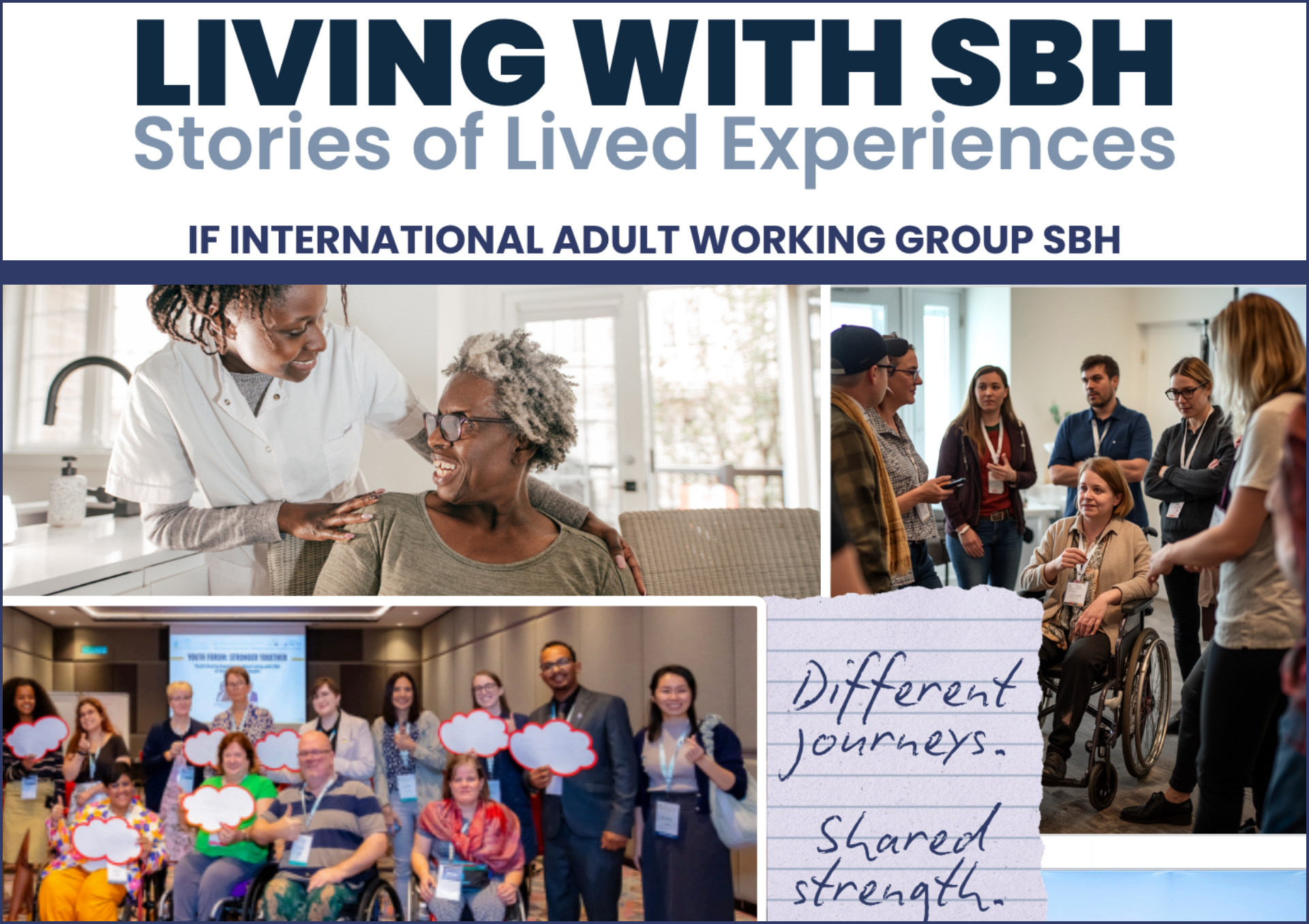
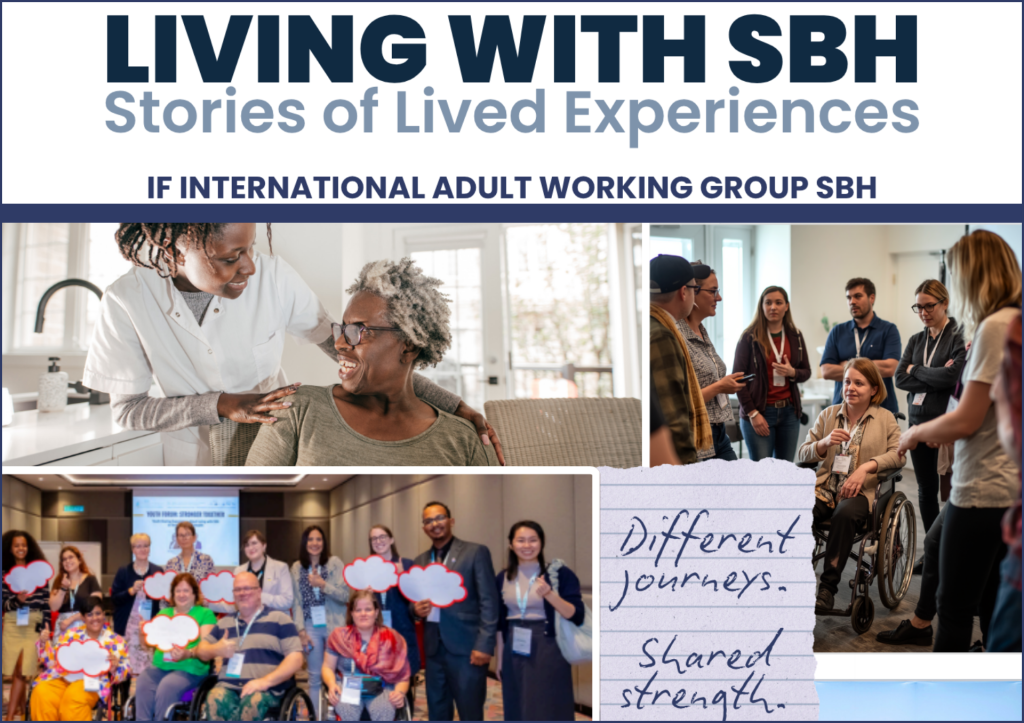
Nebiyat also presented the working groups’ flagship activity for 2026 – “Living with SBH: Stories of Lived Experience” catalogue. This catalogue shares the experiences of six adults from six countries as they navigate adulthood and ageing with a lifelong disability. Each story is individual, but together they offer valuable insight into the challenges, achievements and aspirations of adult life with SBH.
Panel Discussion – Part I
The first panel discussion brought together Catherine Nakanyiga (Spina Bifida and Hydrocephalus Association of Uganda) and Narresh Vijayandran (Spina Bifida & Hydrocephalus, Malaysia). Catherine is a member of the adult working group and in her intervention we heard that when she was growing up with spina bifida, she faced stigma and exclusion that shook her confidence, and she learned that the emotional effects of disability are often hidden and can last for years without support. With time and support, she found her voice to speak openly about spina bifida, continence management and mental health. Today, as a mental health professional, she draws on both lived and professional experience to advocate for inclusion, dignity and better support for people with SBH. In Narresh’s speech, member of the IF International Youth Group SBH, he highlighted that the mental health and wellbeing of young people living with SBH is often neglected, underrepresented or ignored. Narresh opened up and shared with the audience that mental health should be also about reaching out for help and acknowledging that even though adults living with SBH have different experiences than young people with SBH, both groups have one thing in common – the desire to build and live meaningful lives.
The panel also highlighted that mental wellness should be part of SBH care throughout life, not just in a crisis and that there should be support for the person as a whole and not only the condition/disability. The two speakers also shared powerful, encouraging messages, reminding us to focus on what people, organisations and society can do rather than what they can’t.
“Let us build a world where people with SBH can age with dignity, maintain mental wellness, stay connected, and live lives of purpose and belonging.”
Catherine Nakanyiga, (Spina Bifida and Hydrocephalus Association of Uganda)“Living with SBH as a young person is not only about learning about managing your body, but also it’s about understanding yourself.”
Narresh Vijayandran, (Spina Bifida & Hydrocephalus, Malaysia)
Panel Discussion – Part II
The second panel of the webinar featured a discussion with Su Xiao Vin (Malaysia), member of the adult working group and Nebiyat Tesfaye (Ethiopia), member of the IFBSH International Youth Group SBH. Drawing on both professional expertise and lived experiences, the two speakers explored the importance of self-confidence, finding one’s pace and raising awareness about mental health and one having the readiness to openly discuss topics such as loneliness, stress or anxiety.
“You do not need to become someone else to live fully, you just need to learn how to live as yourself”
Su Xiao Vin (SiBIAM)“ We should listen to each other and build supportive communities where the youth can seek support”
Nebiyat Testafaye (ReachAnother Foundation)
Speakers highlighted that health is not only about treating the body and addressing medical emergencies, but also focusing dedicated attention on important areas such as confidence, loneliness and mental health.
Engaging the Global SBH Community
The webinar concluded with an interactive question-and-answer session, giving participants the opportunity to engage directly with the panelists, exchange experiences and discuss practical challenges faced in different countries and contexts. Some of the questions focused on how to overcome stigma across different settings and all panelists shared good practices, such as engaging in raising awareness campaigns and feeling comfortable and confident when it comes to openly speaking about mental health and living with SBH.
This webinar brought together personal stories and experiences related to mental health and wellbeing with SBH. Panelists discussed how mental health changes at different stages of life and shared what it feels like to find, or to struggle to find, the right support. They also offered practical supportive strategies, presenting the perspectives of both younger and older members of our community. Above all, the session offered an opportunity to ask questions, share experiences and suggest ideas for change, so that no one has to deal with the challenges of mental health alone.
Looking Ahead
This year’s webinar, hosted by the IFSBH International Adult Working Group to mark the United Nations International Day of Older Persons and World Mental Health Day, once again highlighted the strength of the global SBH community and the important role of persons living with SBH in shaping more inclusive societies.
For IFSBH, advocating for the rights of persons with disabilities means addressing the barriers that prevent full and equal participation in society. Access to appropriate healthcare, mental health support and lifelong care is fundamental to autonomy, dignity and social inclusion.
Through engagement with European and international advocacy platforms, including the European Commission’s Disability Platform, the World Health Organization (WHO) and the United Nations (UN), IFSBH works to bring the perspectives and priorities of the SBH community into policy discussions and promote the implementation of disability rights.
Through this engagement and our wider advocacy, IFSBH works to ensure that healthcare, mental health and lifelong support are recognised as integral to disability rights, and that persons with SBH can live, age and participate in society on an equal basis with others. Health is an essential enabler of inclusion: without equitable access to healthcare, mental health support and appropriate lifelong care, full and equal participation in society remains out of reach for many persons with SBH.
These themes will also be explored at the 31st International Conference on Spina Bifida and Hydrocephalus in Montréal, Canada, from 15–17 October 2026, providing a further opportunity to bring together lived experiences, scientific knowledge and advocacy priorities to advance the rights, health and inclusion of persons with SBH throughout life.
The IFSBH International Adult Working Group warmly thanks all speakers, participants and partners for making this event a success. We look forward to continuing our collective efforts to turn lived experience into action and advance the rights, health and inclusion of persons with SBH worldwide.